


I used to think choosing a phone charger was mostly about finding one that could deliver enough power. Then I started paying attention to how often I charged my phone, where I charged it, and what else I carried with me. Suddenly, details like cable compatibility, charging standards, portability, and heat became much more important.
A usb c phone charger has become a practical choice for many modern devices because USB-C can support both charging and data transfer across a wide range of electronics. But having a USB-C connector does not automatically mean every charger will perform in exactly the same way. If I were choosing one today, I would look beyond the connector and consider the entire charging setup.
Connector Is Only the Starting Point
USB-C describes the physical connector, not one universal charging performance level. Two chargers can both have USB-C ports while offering different power outputs and charging capabilities. The device being charged also has its own limits, so a charger with a higher maximum output does not necessarily force a phone to accept more power than it is designed to handle.
This is why checking compatibility is more useful than simply seeing the words “USB-C” on the packaging. The cable matters as well. Different cables can support different power levels, so pairing a capable charger with an unsuitable cable may prevent the setup from reaching its expected performance.
Think About How You Use Your Phone
Before choosing a charger, I find it helpful to consider where charging usually happens. Someone who mainly charges at a desk may want a compact charger that leaves room for other electronics. Someone who travels regularly may care more about a lightweight design that can be packed easily.
There is also a difference between charging overnight and needing a quick battery boost during a short break. If I normally charge my phone while working, I might prioritize convenience and multiple ports. If I am traveling, I would pay closer attention to size and compatibility with the devices in my bag. The best charger is not necessarily the one with the most impressive specifications. It is the one that fits the routine you actually have.
Why Charging Speed Can Be Misleading
Fast charging sounds straightforward until you look at the complete chain. The charger has an output rating. The cable has its own capabilities. The phone has a maximum charging rate. Charging protocols determine how the devices communicate and negotiate available power. As a result, simply buying a charger with a very high wattage does not guarantee that your phone will charge at that maximum rate.
For everyday use, I would rather have a charger that works consistently with my phone than one with specifications I cannot fully use. It is also worth remembering that charging speed can change as a battery fills. Phones may reduce charging power as the battery approaches a higher state of charge, which helps manage heat and battery behavior.
When Wireless Charging Makes More Sense
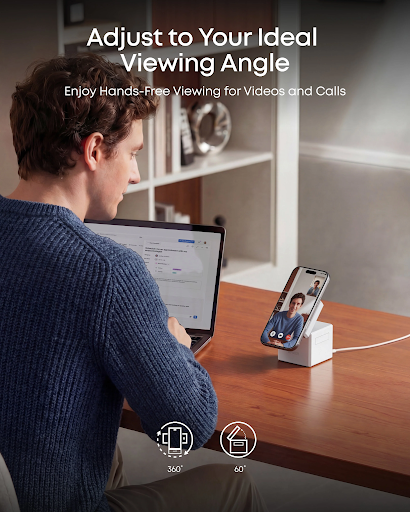
There are times when a cable is the obvious choice, but there are also situations where wireless charging is simply more convenient. A wireless iphone charger can be useful on a nightstand or desk because there is no need to plug and unplug a cable from the phone every time. For compatible iPhones, magnetic alignment can make positioning easier as well.
That convenience does come with trade-offs. Wireless charging can generate more heat and may not always provide the same charging efficiency or speed as a wired connection. I see wired and wireless charging as complementary rather than competing technologies. A USB-C charger can be my main option when I want dependable wired power, while wireless charging can make routine top-ups easier.
Don’t Forget the Power Adapter
One mistake that is easy to make is focusing on the cable and ignoring the power source. A USB-C cable connected to a weak or unsuitable adapter cannot magically provide more power. The adapter needs to support the charging requirements of the device and the cable.
When buying a charger, I would check whether the power adapter is included. If it is not, I would make sure the adapter already available at home is appropriate for the intended use. This is particularly important when replacing an older charger. Keeping the old adapter simply because it fits the cable does not necessarily mean it is the best match for newer equipment.
One Charger Can Do More Than Charge a Phone
Another reason I like USB-C charging setups is their versatility. A suitable USB-C charger may also be useful for earbuds, tablets, portable gaming devices, headphones, and other compatible electronics. That can reduce the number of separate charging accessories you need to carry. For people who travel with several devices, this can make a noticeable difference. Instead of packing multiple charging bricks, a suitable multi-port charger can potentially handle several devices from one location.
Brands such as Anker are one option in this category, but the same evaluation principles apply regardless of manufacturer. Check the specifications and make sure they match your devices before making a decision.
Heat Is Worth Paying Attention To
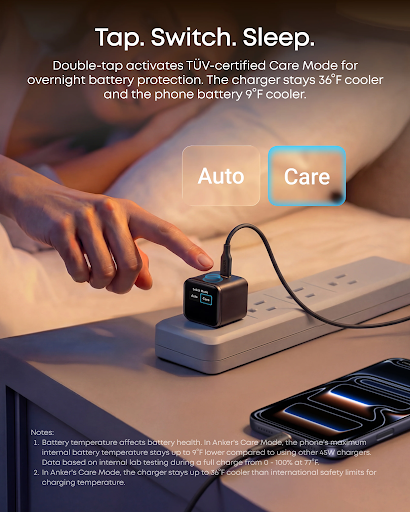
Some warmth during charging is normal, particularly when a device is charging at higher power. However, excessive heat is something I would not ignore. Using a wireless iphone charger with a phone heavily while it is charging can increase the amount of heat produced. A hot environment can add to the problem as well. Keeping charging equipment away from unnecessary heat and using compatible accessories can help create a better charging environment. If a phone or charger becomes unusually hot, I would stop and investigate rather than assuming that more heat automatically means faster charging.
A Simple Way to Compare Chargers
When comparing options, I would make a short mental checklist:
Is it compatible with my phone? Does it provide the power I actually need? Is the cable suitable? Will I use it at home, work, or while traveling? Do I need multiple ports?
Those questions are more useful than comparing long lists of features without considering how they apply to you. A charger with fewer features can be the better purchase if it fits your routine perfectly.
Conclusion
Choosing a USB-C phone charger is really about building a charging setup that works reliably with your devices. The connector itself is only one piece of the equation. Power output, cable capability, charging standards, device compatibility, heat, and intended use all deserve consideration. Wireless charging can provide additional convenience, while wired USB-C charging remains a practical choice when you want a direct and dependable connection. Rather than buying based solely on speed or brand recognition, I would focus on what my devices actually require. That approach usually leads to a simpler setup, fewer unnecessary accessories, and a charger that is useful long after the initial purchase.
FAQs
1. Is every USB-C phone charger the same?
No. USB-C describes the connector, while chargers can differ in power output, charging protocols, efficiency, and supported features.
2. Can a USB-C charger fast-charge every phone?
Not necessarily. Fast charging depends on the phone’s capabilities, the charger’s output, the cable, and the charging standards supported by the devices.
3. Is a wireless iPhone charger better than a USB-C charger?
Neither is universally better. Wired charging can be useful for speed and efficiency, while wireless charging offers greater convenience for compatible devices.
4. Does the USB-C cable affect charging speed?
Yes. Cables have different power capabilities, so using an unsuitable cable can limit the performance of an otherwise capable charger.
5. What should I check before buying a USB-C charger?
Check your phone’s charging requirements, the charger’s power output, cable compatibility, supported charging standards, number of ports, and whether the charger suits where you plan to use it.