

Understanding Career Pivots
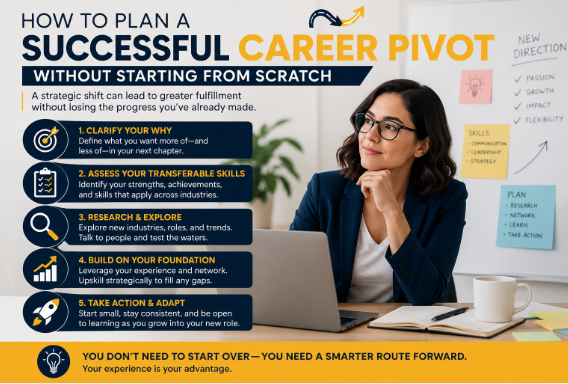
A career pivot is a strategic shift in one’s professional trajectory that allows individuals to leverage their current skills while moving into a different industry or role. Unlike a complete career change, which often necessitates starting anew, a career pivot involves building upon existing expertise to explore new opportunities that align with one’s interests and market demand. This approach can provide a more seamless transition, minimizing the need for extensive retraining or a lengthy job search.
Several factors may motivate an individual to consider a career pivot. Changing personal interests, evolving industry trends, or a desire for greater job satisfaction can all serve as catalysts. For instance, someone working in marketing may discover a passion for data analysis, prompting them to shift their focus while still utilizing their knowledge of market strategy. Recognizing the desire for change is a critical first step; it signals that one is ready to embrace new challenges and redefine their professional identity.
Moreover, a career pivot can be an empowering choice for those seeking personal and professional growth. It presents opportunities to expand one’s skill set, connect with diverse networks, and cultivate a more fulfilling career experience. By embracing the idea of a pivot, individuals can create a roadmap that maximizes their existing capabilities while exploring new roles that offer greater alignment with their current aspirations. As industries continue to evolve, the ability to adapt and pivot can significantly enhance one’s career resilience and adaptability.
Assessing Your Current Skills and Experience
In the journey toward a successful career pivot, it is essential to start by assessing your current skills and experience comprehensively. This evaluative process allows you to identify how your existing capabilities can be transformed into valuable assets in a new field. Begin by creating a list of your skills, categorized as hard skills—such as technical proficiency or data analysis—and soft skills, including communication and leadership abilities. This categorization will provide clarity on the strengths you bring to potential employers in your new career.
Next, it is prudent to engage in self-reflection to gauge your level of expertise in these identified skills. Consider utilizing self-assessment tools, such as online quizzes or skill inventories, designed to measure your competencies objectively. Additionally, seek feedback from colleagues or mentors who can offer insights into your strengths and areas for improvement. This peer evaluation can unveil transferable skills that you might overlook and can aid in boosting your confidence as you pivot your career.
Moreover, examine your past experiences, whether they be projects, previous roles, or volunteer work, to uncover any applicable achievements that demonstrate your capability in specific areas. The relevance of these experiences is paramount; highlight instances where you adapted to new challenges or industries, showcasing your agile mindset. Keep in mind that the key to a successful career pivot lies in recognizing the potential of these transferable skills. Emphasizing and communicating these skills effectively will allow you to position yourself strategically as you venture into a new career path. As you finalize your assessment, prepare to leverage this information in crafting persuasive resumes and narratives during your job search, ultimately easing the transition into a fulfilling new role.
Researching Potential Career Paths
Embarking on a career pivot requires thorough research to ensure that the transition aligns with your skills, interests, and values. To effectively explore new industries or roles, consider utilizing multiple methods to gather comprehensive information.
Networking plays a pivotal role in discovering insights about potential career paths. Reach out to individuals already working in your target industry through professional networking sites such as LinkedIn. Attend industry-related events, webinars, or local meetups to meet experienced professionals, exchange valuable knowledge, and establish connections that could aid in your career transition.
Informational interviews are another invaluable resource for gathering information about specific roles. Schedule one-on-one conversations with people whose career trajectories you admire or who hold positions in fields of interest. These discussions can offer firsthand insight into the day-to-day responsibilities and challenges of various roles, helping you assess whether a particular career path resonates with your ambitions.
Utilizing online resources is equally crucial in your research. Websites like Glassdoor, Indeed, and the Bureau of Labor Statistics provide detailed job descriptions, salary expectations, and industry outlooks. Additionally, industry-specific forums or social media groups can offer support and advice from those with hands-on experience in your desired field.
Continue to educate yourself through relevant courses, certifications, or webinars that enhance your understanding and skill set in the new area you wish to explore. Many online platforms, such as Coursera or Udacity, offer specialized training tailored to a variety of industries, making it easier to acquire the necessary competencies without starting from scratch.
Ultimately, a well-rounded approach to researching potential career paths that incorporates networking, informational interviews, and online resources will empower you to make informed decisions during your pivot. By assessing various aspects of your target professions and industries, you can increase the likelihood of a successful transition.
Setting Clear Goals and Expectations
When considering a career pivot, it is essential to set clear and achievable goals to ensure a smooth transition. The SMART criteria—Specific, Measurable, Achievable, Relevant, and Time-bound—provide a structured approach to goal setting that can significantly enhance your chances of success.
First, specificity in your objectives helps outline precisely what you wish to achieve in your career pivot. For instance, instead of stating a vague goal like “I want to change my career,” a specific goal would be, “I want to transition from a marketing role to a data analyst position in the tech industry.” This precision enables you to focus your efforts and determine the skills and knowledge you need.
Measurability involves setting criteria that will help you track your progress. For example, you might aim to complete two relevant online courses and network with five industry professionals within the next three months. These metrics allow you to evaluate your journey and adjust your strategies accordingly.
Your goals should also be achievable, considering your current skills and resources. Ensure that the objectives are realistic; if you have no background in data analytics, it would be impractical to set a goal of securing a senior data analyst position within a month. Instead, focus on incremental achievements that build your qualifications.
Relevance emphasizes the need for your goals to align with your overall career aspirations. Ensure that your pivot is moving you closer to where you envision your career heading in the long term. Lastly, time-bound goals introduce deadlines to your plans, creating a sense of urgency and helping to maintain focus. You may decide that you want to secure a new job by the end of the year, which could further motivate you in your pursuit.
Setting clear goals and expectations not only streamlines your career pivot process but also equips you to face potential obstacles. By regularly reviewing your goals and reflecting on your progress, you can adapt to challenges and stay on track in achieving a successful career transition.
Building a Support System
Embarking on a career pivot can be a daunting task, often filled with uncertainty and challenges. Therefore, establishing a robust support system is essential for navigating this transition effectively. Having a network that includes mentors, peers, and professional communities can make a significant difference in your journey towards a new career.
First, identifying mentors who have successfully navigated similar career changes can provide invaluable guidance. These individuals can offer insights based on their experiences, helping you to avoid common pitfalls. Reach out to former colleagues or industry leaders who resonate with your aspirations. Engaging in conversations about their journeys can not only broaden your understanding but also inspire you to forge your own path.
In parallel, actively engaging with professional communities is another strategy to enhance your support system. Joining industry-specific forums, attending conferences, or participating in workshops can connect you with like-minded individuals facing similar challenges. These interactions can lead to opportunities for collaboration, networking, and shared learning. Additionally, online platforms such as LinkedIn or professional Facebook groups are valuable tools for establishing connections with others who can assist in your transition.
Moreover, leveraging your existing social connections is crucial. Informing friends and family about your career pivot can create a circle of encouragement and advice. They may offer perspectives that you had not considered or introduce you to contacts within your desired field. Remember, your social network can serve as both a source of motivation and a practical resource for information.
In summary, constructing a strong support system is vital when planning a successful career pivot. By seeking out mentors, engaging with professional communities, and harnessing social connections, you can create an environment conducive to growth and development. This comprehensive support network can provide the encouragement and guidance needed to navigate the complexities of career change effectively.
Gaining Relevant Experience and Skills
Transitioning to a new career can be daunting, especially when it requires acquiring new skills or experience relevant to a different field. One effective approach to bridge this skills gap is to actively seek out volunteer opportunities. Volunteering allows individuals to apply their existing skills in a new context, providing practical experience that enhances their resume. Many organizations, especially non-profits, welcome volunteers, and this can be an excellent way to gain insights into a new industry while building a relevant network.
Internships represent another pathway to gaining the necessary experience for a successful career pivot. Although they are often associated with students, many professionals can benefit from internships as a means of transitioning into a new field. These positions can help individuals learn from seasoned professionals, understand industry standards, and showcase their ability to adapt. A strategic choice of internship can signal to potential employers the seriousness of one’s commitment to the new career path.
Additionally, online courses have become increasingly popular and essential for those looking to upgrade their skills. Platforms such as Coursera, LinkedIn Learning, and Udemy offer a wide array of courses tailored to diverse fields. These programs not only provide theoretical knowledge but also practical applications and projects, allowing individuals to build a portfolio that highlights their competence in the new area of interest.
Moreover, attending workshops, seminars, and networking events can expand knowledge and provide insights into industry trends. Engaging with professionals in the desired field can also lead to mentorship opportunities, which can be invaluable when making a career shift. By leveraging these various strategies to gain relevant experience and skills, individuals can effectively position themselves for a successful career pivot.
Updating Your Personal Brand and Resume
Embarking on a career pivot necessitates a comprehensive revamping of your personal brand and resume. Your personal brand is a reflection of your professional identity; thus, aligning it with your target career is paramount. Begin by identifying the core values and skills that resonate with the new direction you wish to pursue. Consider what differentiates you from other candidates and how you can express this in your branding.
When it comes to tailoring your resume, start with a clean and professional layout that highlights your relevant experience. Focus on transferable skills that apply to your new career path. Use action verbs and quantifiable achievements to demonstrate your contributions in previous roles. For instance, if you are shifting from marketing to project management, emphasize skills such as leadership, organization, and problem-solving that are pertinent to both fields.
In addition to your resume, updating your cover letter is crucial. This document allows you to narrate your story effectively. Make sure to address how your previous experience has prepared you for this transition and express genuine enthusiasm for the new role. Tailor each cover letter specifically to the job application, reiterating how your values align with the company’s mission.
Furthermore, leveraging online professional profiles, such as LinkedIn, can enhance your visibility. Ensure that your online presence echoes the changes made in your resume and personal brand. An optimized profile should include a professional photo, a compelling headline, and a succinct summary that encapsulates your career transition. Engaging with industry-specific content can also enhance your credibility and network, establishing you as a knowledgeable candidate in your new field. By taking the time to carefully update your personal brand and related documents, you set a solid foundation for a successful career pivot.
Navigating the Job Search Process
Embarking on a career pivot can be both exciting and daunting, particularly when it comes to the job search process. Leveraging effective strategies is crucial to successfully transitioning into a new field without the burden of starting entirely from scratch. One of the primary steps is tailoring your resume and cover letter to reflect your new career interests. Highlight transferable skills and relevant experiences, even if they were gained in a different context. This approach not only demonstrates your adaptability but also allows potential employers to see the value you can bring to their organization.
When preparing for interviews in your new sector, it is essential to research the specific demands and expectations of the role. Familiarize yourself with industry jargon and key competencies. Be prepared to articulate why you are making this transition and how your background uniquely positions you to contribute effectively. Utilize the STAR (Situation, Task, Action, Result) method to structure your responses, ensuring you clearly convey your achievements and the experience you can leverage.
Networking plays a pivotal role during a career pivot. Consider reaching out to individuals in your desired field and seeking informational interviews to gain insights and expand your professional circle. Attend industry events and engage with online communities to connect with like-minded professionals. Online platforms such as LinkedIn can be invaluable for building these connections. By sharing relevant content and contributing thoughtfully to discussions, you can enhance your visibility and establish yourself as a knowledgeable candidate in your new area.
In conclusion, navigating the job search process during a career pivot requires strategic planning and a focus on relevance. By tailoring your applications, preparing meticulously for interviews, and engaging in targeted networking, you can effectively position yourself for success in your new field.
Reflecting and Adjusting Your Plan
Embarking on a career pivot is a complex yet rewarding journey that necessitates substantial self-reflection and strategic adjustment. As you navigate through this transformative process, it is essential to consistently evaluate your progress against the predefined goals. This reflective practice not only ensures that you remain aligned with your career aspirations but also allows you to identify any potential setbacks early on.
Regularly scheduled reflection periods provide a structured opportunity to analyze how effectively your current strategies are facilitating your career pivot. During these evaluations, consider asking yourself critical questions such as: Are the skills I am developing relevant to my new career path? Am I making connections in my desired industry? Do I feel satisfied with my progress? Such inquiries will yield valuable insights that can inform adjustments to your plan.
Moreover, being adaptable is key in the modern job market, where changes can occur rapidly. Embrace new experiences and challenges that come your way; they may lead you to unexpected opportunities that resonate more with your career goals than your original plan. Flexibility enables you to pivot strategically within your industry, rather than feeling tethered to a specific course of action. If a new approach, tool, or networking opportunity arises, welcome it as part of the process and not as a deviation from your path.
In order to effectively navigate the intricacies of your career pivot, it is vital to cultivate a mindset of continuous learning and adaptation. This includes keeping abreast of industry trends, seeking feedback from peers and mentors, and being open to refining your objectives as you acquire new insights. A successful career pivot is not merely about the end goal; it is equally about appreciating the journey and the growth that accompanies it.