

Understanding MOOCs: A Brief Overview
Massive Open Online Courses, commonly referred to as MOOCs, have transformed the landscape of education since their inception in the late 2000s. These courses provide an innovative way for individuals to access quality learning opportunities from renowned institutions and educators, all from the comfort of their own homes. MOOCs are designed to accommodate large numbers of participants, making education more accessible to a global audience.
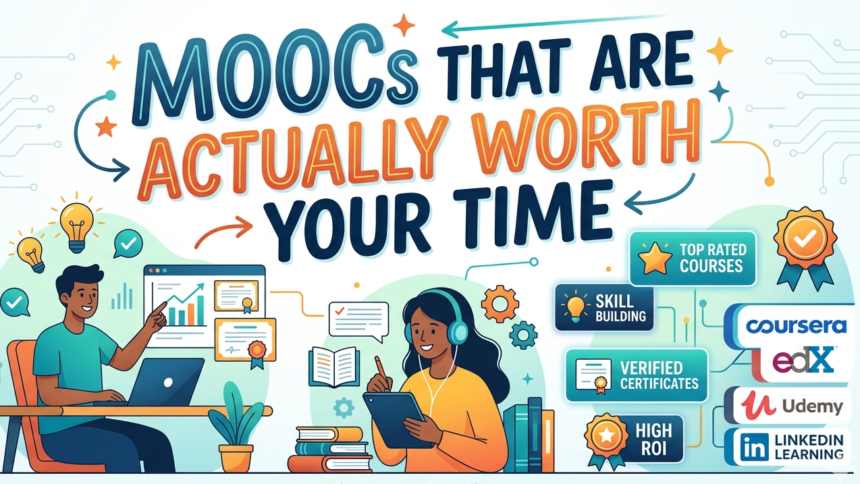
The concept behind MOOCs revolves around the idea of offering free or low-cost educational content to anyone interested, regardless of their geographical location or academic background. Various platforms, such as Coursera, edX, and Udacity, have emerged to host these courses, partnering with esteemed universities and organizations to deliver diverse content across a multitude of subjects, ranging from computer science and data analytics to humanities and personal development.
MOOCs typically involve a blend of video lectures, reading materials, quizzes, and peer interaction, which fosters a collaborative learning environment. While completing a MOOC, participants have the opportunity to engage with fellow learners through discussion forums and group projects, enhancing their overall learning experience. Despite the apparent benefits, some challenges persist, including issues with course completion rates and the varying quality of certain offerings. Many participants may enroll in a MOOC intending to gain new skills or knowledge but often find it difficult to stay engaged without the structure of traditional classroom settings.
In essence, MOOCs represent a significant advancement in educational access, enabling learners worldwide to pursue their interests and professional development. However, prospective learners should carefully consider the quality and relevance of a course before deciding to invest their time in it. Understanding the fundamentals of what MOOCs are and the platforms that support them is crucial for making informed decisions in the rapidly evolving landscape of online education.
Criteria for Choosing High-Quality MOOCs
When selecting a Massive Open Online Course (MOOC), it is imperative to assess several critical factors that indicate its quality and potential value. One of the primary elements to consider is accreditation. Accredited courses are often recognized by educational institutions and employers, thus adding credibility to the skills acquired through the course. Ensure that the MOOC provider has affiliations with established educational entities, which can enhance the course’s recognition.
Another crucial factor is the credentials of the instructors. Investigate the professional and academic backgrounds of the course educators. Instructors with significant industry experience or those who hold advanced degrees in their fields typically bring a wealth of knowledge and insights, offering participants a richer learning experience.
Peer reviews play a vital role in evaluating MOOCs. Before enrolling, examine the feedback from individuals who have previously taken the course. Look for patterns in reviews that discuss course content, structure, and overall satisfaction. High ratings from past students can provide assurance that the course meets expected quality standards.
The quality of course content should also be a primary criterion. Assess the curriculum to ensure it aligns with your learning objectives and covers relevant topics comprehensively. High-quality MOOCs often provide a mix of multimedia resources, including videos, readings, and assessments, which cater to different learning styles and keep participants engaged.
Finally, consider outcome-oriented evaluations, where the MOOC emphasizes the potential results of successfully completing the course. Many high-quality MOOCs include capstone projects or assessments that allow participants to apply what they have learned, thus increasing the practical value of the course. By carefully evaluating these criteria—accreditation, instructor credentials, peer reviews, course content quality, and outcome-oriented evaluations—you can make an informed decision about which MOOCs are truly worth your time.
Top Recommended MOOCs That Deliver Value
In the ever-expanding world of online education, numerous MOOCs (Massive Open Online Courses) have emerged as valuable resources for learners seeking to enhance their skills and knowledge. Below is a curated list of MOOCs that have received positive feedback and are regarded as worthy of students’ time.
One highly recommended course is “Data Science Specialization“ offered by Johns Hopkins University on Coursera. This specialization consists of ten courses that cover the entire data science process, including statistical analysis, machine learning, and data visualization. Participants gain proficiency in using R, a programming language that is fundamental for data analysis, making it a top choice for those looking to enter the data-driven workforce.
Another noteworthy course is “Machine Learning” from Stanford University, also available on Coursera. Taught by renowned professor Andrew Ng, this course provides a comprehensive introduction to machine learning, covering theories and practical applications. By completing this course, learners develop stronger analytical skills and gain valuable insights into algorithms, enhancing their appeal in technology-related fields.
For those interested in business, the “Digital Marketing Specialization“ by the University of Illinois on Coursera is particularly beneficial. This series of courses covers essential aspects of digital marketing, including search engine optimization (SEO), social media marketing, and marketing analytics. Completing this specialization equips students with current strategies and tools critical for succeeding in today’s digital marketplace.
Lastly, the “Introduction to Programming with Python“ from the University of Michigan focuses on programming fundamentals using Python. This MOOC is perfect for beginners and covers a range of topics, including data structures and algorithms. Students who complete this course gain foundational skills that can lead to further studies in computer science or software development.
Each of these MOOCs offers a unique value proposition with relevant skill sets that align well with current job market demands, ultimately making them a worthwhile investment of time for learners.
Maximizing Your Learning Experience: Tips and Strategies
To optimize the benefits of Massive Open Online Courses (MOOCs), it is essential to adopt a strategic approach towards learning. Setting realistic goals is the first critical step. Instead of aiming to complete multiple courses simultaneously, focus on one or two that align with your personal or professional objectives. This allows for deeper engagement and retention of the material. Clearly defined goals, such as completing specific modules each week, help maintain motivation and provide a sense of achievement.
Creating a structured study schedule is imperative for success in online learning environments. Allocate specific times during your week dedicated solely to coursework and stick to this routine. Treating these periods as unmissable appointments can enforce discipline and create a consistent learning habit. In addition, ensuring that you have a quiet and designated study space can further enhance concentration and productivity.
Engagement within course communities is another vital strategy. Many MOOCs offer forums or discussion groups where learners can share insights, ask questions, and network with peers. Actively participating in these communities can enhance your understanding of the course material, as you are exposed to diverse perspectives and experiences. Don’t hesitate to reach out to instructors or fellow learners; collaboration often leads to new insights and a richer learning experience.
Incorporating supplementary resources can also broaden your understanding and application of course materials. Explore additional readings, podcasts, or videos related to your subject matter. By diversifying your learning sources, you not only reinforce what you have learned but can also discover new interests and knowledge that relate to your MOOCs.