


Losing a tooth doesn’t feel like an emergency once the initial pain has settled. There’s no bleeding, no swelling, and life carries on. That false sense of calm is exactly why so many people delay looking into dental implants in Cardiff, not realising that the real damage is happening quietly, underneath the gum, long before it becomes visible.
Bone Needs a Reason to Stay
Your jawbone isn’t a fixed structure that simply sits there holding your teeth in place. It’s living tissue, and like any living tissue, it responds to use. Every time you bite and chew, the pressure travels down through the tooth root and into the bone, signalling to your body that this bone is needed and should stay strong.
Take the tooth away, and that signal stops. Without pressure to respond to, the body starts reabsorbing the bone in that area, redirecting resources elsewhere. This process, known as resorption, doesn’t wait for you to decide you’re ready to deal with it. It can begin within months of losing a tooth.
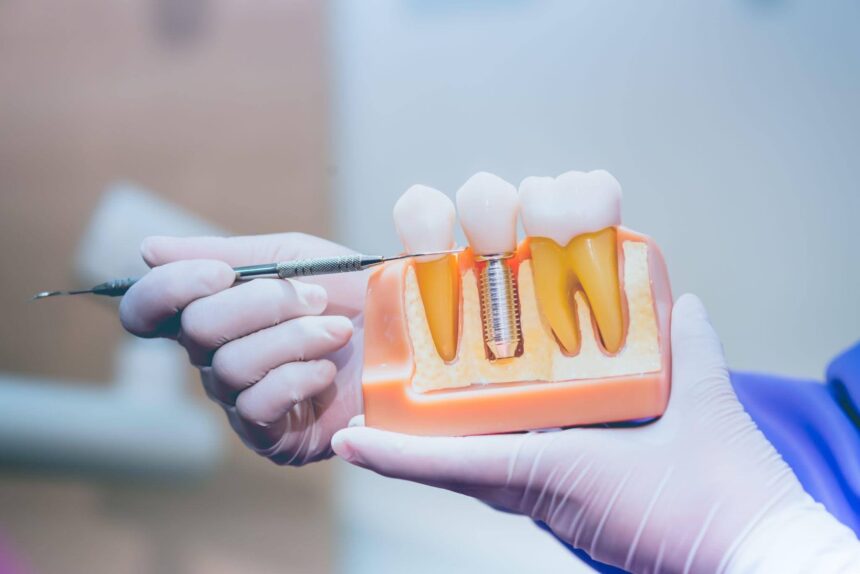
This is one of the clearest reasons dentists recommend looking into dental implants in Cardiff sooner rather than later. An implant is the only replacement that includes an artificial root, which means it’s the only option that can continue sending that pressure signal down into the bone.
What Bone Loss Actually Looks Like Over Time
In the first year after losing a tooth, patients can lose a noticeable percentage of the bone width in that area. It doesn’t stop there either. Left untreated for several years, the bone can shrink both in width and height, changing the shape of the jaw itself.
This isn’t only about the gap where the tooth used to be. Neighbouring teeth can start to tilt into the empty space, since they no longer have a neighbour holding them in position. Bite alignment can shift gradually, sometimes causing jaw discomfort that seems unrelated to the original missing tooth. The face can also begin to look slightly different, since the jawbone plays a role in supporting the structure around the mouth and lower face.
By the time people finally book a consultation for dental implants in Cardiff, some have waited long enough that bone loss has become part of the conversation, not just the missing tooth itself.
Why Waiting Makes Treatment More Complicated
Dental implants rely on there being enough healthy bone to anchor into. When bone has been given years to resorb, that anchor point may no longer be there in sufficient quantity.
This doesn’t mean implants become impossible. It means additional steps are sometimes needed first. Bone grafting, where material is added to rebuild width and density before an implant can be placed, is common in these cases. It adds time, cost and an extra stage of healing that wouldn’t have been necessary had treatment started earlier.
This is the part patients don’t realise when they first ask about dental implants in Cardiff for prices. The number they’re quoted assumes adequate bone is already present. If grafting is needed, the full picture changes, and it’s almost always driven by how long the gap was left untreated.
Replacing a Tooth Sooner Rather Than Later
None of this is meant to alarm anyone who’s currently sitting with a gap and hasn’t made a decision yet. Bone loss happens gradually, and a few months of thinking things over rarely changes the outcome. The concern is more about the pattern of leaving a missing tooth for years without any plan at all.
If you’re currently exploring dental implants in Cardiff, the timing question is worth raising directly with your dentist. They can assess how much bone is present now, whether grafting would be needed, and how that compares to what treatment might involve if you waited another year or two.
Bridges and dentures remain valid alternatives for some patients, but neither replaces the root, and neither sends that pressure signal into the bone. Only an implant does that, which is why it’s often described as the more biologically complete solution rather than simply the most modern-looking one.
A Quiet Problem Worth Taking Seriously
Cyncoed Dental Practice and other local providers tend to raise this bone loss timeline early in consultations, precisely because it’s the part patients are least likely to have considered before walking in. A missing tooth rarely feels urgent. The bone underneath it doesn’t share that patience.
Final Thoughts
The gap left by a missing tooth is only part of the story. What’s happening underneath, in the bone that used to support it, tends to matter more over time than most people expect. Anyone weighing up dental implants in Cardiff is better placed making that decision with a clear picture of what waiting actually costs, not just in price, but in bone that won’t come back on its own.