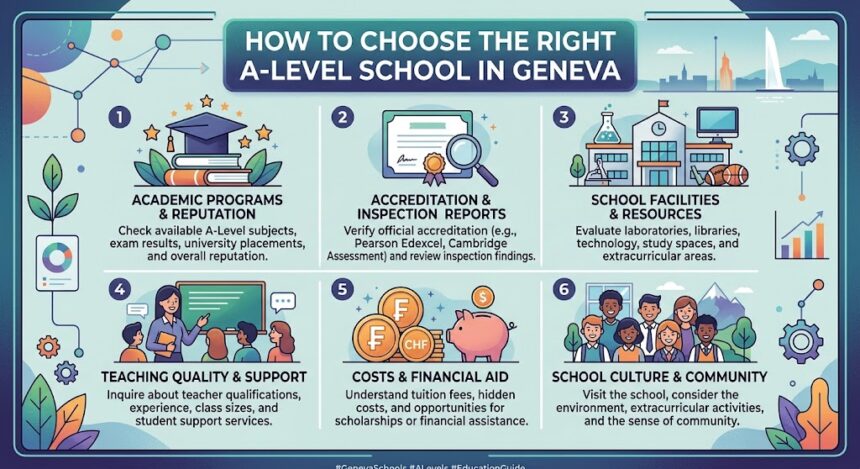
For expatriate and local families residing in the Canton of Geneva, selecting the optimal educational route for secondary school is a defining milestone. While the International Baccalaureate (IB) has a strong presence across Switzerland, the British A-Level pathway remains one of the most respected, highly specialized, and globally recognized pre-university frameworks available today.
Choosing a school that follows the English National Curriculum enables students to narrow their academic focus during their final two years of secondary education, mastering subject areas aligned with their future career ambitions. When researching institutions, turning to expert guides on a level schools in geneva allows parents to evaluate course options, campus culture, and university progression rates across the Lake Geneva region.
Why the A-Level Pathway Appeals to International Families
Unlike broad-spectrum diploma models that mandate study across six distinct subject groups, A-Levels (Advanced Levels) encourage deep academic specialization. Students typically select three or four subjects in Key Stage 5 (Years 12 and 13 / Sixth Form), allowing them to dedicate their time entirely to areas of genuine interest and strength.
Key Benefits of Studying A-Levels in Switzerland
- Targeted Specialization. Ideal for students aiming for competitive university degrees in STEM, Medicine, Law, or Business, where deep subject knowledge is essential.
- Global Recognition. Accepted by top universities worldwide, including the UK Russel Group, US Ivy League institutions, and major European universities.
- Flexibility in Subject Choice. Students are free to combine subjects according to their strengths – for instance, focusing entirely on Mathematics, Physics, and Further Mathematics, or pairing Literature with History and Languages.
- English-Medium Instruction with Local Language Integration. Teaching takes place in English, but reputable schools integrate rigorous French language courses to ensure local cultural fluency and meet Swiss university entry requirements.
Evaluating A-Level Schools in the Lake Geneva Region
Geneva hosts several world-class international institutions offering the British curriculum. Comparing these campuses requires looking beyond basic academic results to evaluate how well each environment supports a student’s individual learning style and well-being.
Essential Factors to Compare
- Verify that the school offers the specific combination of IGCSE and A-Level subjects your child needs for their intended university course.
- Smaller teacher-to-student ratios (often between 8 to 15 students in Sixth Form) ensure personalized academic coaching, regular goal-setting, and dedicated university application guidance.
- Leading schools encourage students to complete the Extended Project Qualification (EPQ), an independent research project highly valued by university admissions officers.
- Relocation and high-stakes exams can bring pressure; choosing a campus with strong mental health and wellbeing frameworks helps pupils maintain a healthy balance.
Key Questions Parents Should Ask During School Visits
When attending open events or taking campus tours in Geneva, asking targeted questions will reveal whether a school aligns with your family’s long-term plans.
| Area of Inquiry | Specific Questions to Ask Admissions |
| University Guidance | What percentage of graduates enter their first-choice university? Do tutors assist with UK UCAS, US Common App, and Swiss higher education admissions? |
| Language Standards | How does the school ensure non-native English speakers receive EAL support while gaining advanced French qualifications? |
| Transition Support | How does the school integrate new students arriving from other educational systems (such as the US High School diploma or French Baccalauréat)? |
Conclusion
Selecting an A-Level school in Geneva provides young adults with a clear, rigorous, and supportive academic environment during their crucial pre-university years. By balancing course flexibility, language development, and personalized pastoral care, students gain both the academic credentials and personal confidence needed to excel on the global stage.
Taking time to explore regional comparisons, connect with admissions teams, and visit campuses in person ensures you find an educational community where your child will thrive.