


Public Wi-Fi has become part of everyday life. Whether you are working from a coffee shop, waiting at an airport, staying in a hotel, or studying at a library, connecting your Windows laptop to an available network can be incredibly convenient. However, convenience should not mean ignoring online privacy and security.
Although modern websites increasingly use encryption, public networks can still present privacy and security concerns. The Federal Trade Commission recommends checking for secure HTTPS connections and taking additional precautions when using public Wi-Fi.
Fortunately, Windows users can take several simple steps to make their online activities safer.
Why Public Wi-Fi Requires Extra Attention
Not every Wi-Fi network is equally trustworthy. Some networks may be poorly configured, while others can be fake hotspots designed to look legitimate. Connecting automatically to an unfamiliar network can therefore create unnecessary risks.
This does not mean you should avoid public Wi-Fi completely. Instead, it is important to combine safe browsing habits with appropriate security tools.
One basic rule is to check whether websites use HTTPS before entering sensitive information. You should also avoid entering financial or highly confidential information on networks you do not trust.
Use a VPN for an Additional Layer of Privacy
A VPN can create an encrypted connection between your device and the VPN service, helping protect your internet traffic from being easily observed on the local network.
For Windows users who regularly connect to public Wi-Fi, iTop VPN is one option to consider. Its Windows application is designed to provide an encrypted connection and includes features such as a kill switch, which can help prevent internet traffic from continuing if the VPN connection unexpectedly drops.
A VPN should not be viewed as a replacement for general cybersecurity practices, but it can be a useful additional layer when connecting through unfamiliar networks.
Can You Use a VPN Free?
Cost can be a concern for people who only occasionally need a VPN. Fortunately, there are services that provide free options for users who want to try VPN protection without immediately purchasing a subscription.
If you are looking for a VPN free option, iTop VPN provides a free VPN service that can be used across supported devices. Its Windows offering includes free server access and does not require registration to establish a free VPN connection, according to the provider.
Before choosing any free VPN, however, it is worth checking what features are included, what limitations apply, and how the provider handles privacy.
Keep Your Windows PC Updated
Your operating system, browser, and security software should also be kept up to date.
Software updates frequently include security patches that address newly discovered vulnerabilities. The FTC recommends installing updates for operating systems, browsers, security software, and mobile applications when they become available.
On Windows, enabling automatic updates can make this process easier because important security improvements can be installed without requiring you to remember to check manually.
Avoid Automatic Connections to Unknown Networks
Your laptop may remember Wi-Fi networks you have previously used and attempt to connect automatically when they become available again. While this can be convenient, it is better to review your Wi-Fi settings and avoid connecting automatically to unfamiliar networks.
Before joining a public hotspot, confirm that you are selecting the legitimate network provided by the business, hotel, airport, or other location.
When possible, ask staff for the official network name rather than simply choosing the strongest signal.
Use Strong Passwords and Two-Factor Authentication
Protecting your network connection does not protect accounts that use weak or reused passwords.
Use unique, strong passwords for important accounts and enable two-factor authentication whenever it is available. If one password is compromised, unique passwords can help prevent attackers from using the same credentials across multiple services.
A password manager can also make it easier to maintain different passwords without having to memorize every one.
Be Careful With Sensitive Activities
Even with security tools in place, you should think carefully before performing highly sensitive activities on an unfamiliar network.
For example, if you need to access an important financial account, verify the website address carefully and make sure the connection is secure.
Also remember that encryption provided by a VPN does not protect you from phishing websites, malware, fraudulent downloads, or scams. Good browsing habits remain essential.
A Simple Security Routine for Public Wi-Fi
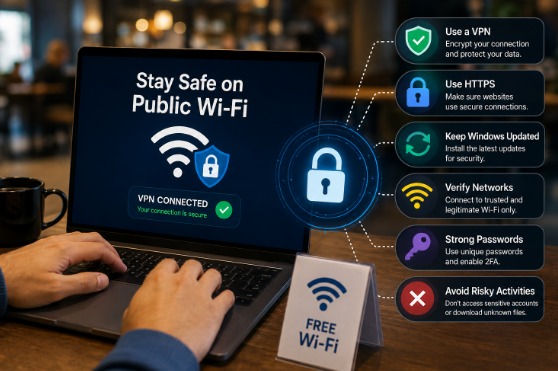
Before connecting your Windows laptop to public Wi-Fi, take a few seconds to follow this checklist:
- Confirm the correct Wi-Fi network name.
- Keep Windows and your browser updated.
- Use HTTPS websites whenever possible.
- Avoid downloading suspicious files.
- Use strong, unique passwords.
- Enable two-factor authentication on important accounts.
- Disconnect from public Wi-Fi when you no longer need it.
These small habits can significantly improve your overall online security.
Final Thoughts
Public Wi-Fi is useful, but convenience should always be balanced with security. Windows users can reduce unnecessary risks by keeping their devices updated, using secure websites, avoiding suspicious networks, protecting their accounts, and considering a VPN for an additional layer of privacy.
For users who want to explore a free option, iTop VPN provides a Windows-compatible VPN solution with security and privacy features designed for everyday internet use.
The goal is not to make internet use complicated. A few simple precautions can help you enjoy the convenience of public Wi-Fi while making more informed decisions about your online privacy and security.