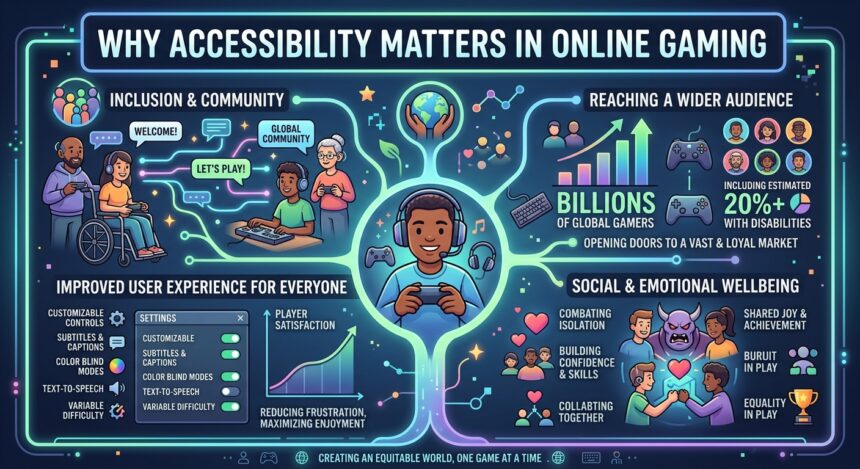
Online gaming has become one of the most popular forms of entertainment, attracting people of different ages, backgrounds and abilities. As gaming continues to grow, developers increasingly focus on making their platforms easier for everyone to use. Accessibility is not simply about meeting technical requirements. It helps more people enjoy games comfortably, participate in communities and engage with content in ways that suit their individual needs. When developers design with accessibility in mind, they create experiences that benefit a much wider audience.
Gaming Should Feel Welcoming
Many people assume accessibility only helps those with disabilities, but accessible design improves the experience for all players. Features such as adjustable text sizes, colour settings and clear menus often make games easier to navigate regardless of your circumstances.
For example, someone playing on a small mobile screen may benefit from larger text, while another person might appreciate clearer tutorial instructions when learning a new game. These adjustments remove frustration and allow players to focus more on enjoyment.
More Choice Means More Comfort
People engage with games in different ways, which is why customisation options have become increasingly important. Many developers now allow players to adjust controls, audio settings and visual displays.
This flexibility helps people create an experience that suits their needs. A player with limited hand mobility may prefer remapped controls, while someone playing in a noisy environment could rely more heavily on subtitles. Explore the accessibility settings before starting a new game to see which options improve your experience.
When people can personalise how they interact with a game, they often feel more confident and comfortable while playing.
Communities Benefit Too
Accessibility extends beyond gameplay itself. Online communities, forums and social features all play a role in helping people feel included.
When developers provide readable interfaces, captioned content and clear communication tools, more people can participate in conversations. This encourages broader discussion and helps users connect with others who share similar interests. A welcoming community often retains members for longer because people feel comfortable contributing rather than simply observing.
Different Gaming Preferences Matter
The gaming world includes a huge variety of experiences, from story-driven adventures to casual mobile games and discussions about entertainment platforms. Communities often explore topics ranging from puzzles and strategy titles to slot games online, with players sharing information, recommendations and personal experiences.
Accessible design helps people engage with these discussions more easily. When websites, forums and gaming platforms support a wide range of users, more people can understand content and take part in conversations on equal terms.
Mobile Access Opens New Doors
The growth of mobile gaming has highlighted the importance of accessibility. Many people now access games through smartphones and tablets rather than dedicated gaming hardware.
Developers often include touch-friendly controls, scalable menus and adaptable layouts to improve usability across different devices. These features allow players to enjoy gaming during a commute, while travelling or from the comfort of their home. Small changes may seem insignificant, but they often make a meaningful difference to everyday use.
Better Design Benefits Everyone
The strongest accessibility features often go unnoticed because they feel natural. Clear navigation, readable content and flexible settings improve usability whether you have a specific accessibility need or not.
As gaming continues to evolve, accessibility will remain an important part of creating enjoyable experiences. When developers invest in inclusive design, more people can participate, connect with others and enjoy entertainment without unnecessary barriers.