

We brush our teeth twice a day, wash our faces and moisturise our skin without much thought. These habits stick because they are simple, quick and attached to moments that already happen every day. Nasal hygiene can work the same way. With a little planning, rinsing can become a two-minute part of your morning or evening that you barely have to think about.
Pre-measured saline nasal rinse packets make that much easier, because they remove the measuring and mixing that can make rinsing feel like a chore. In this guide, we show you how to set up a routine that lasts: choosing the best time of day, organising your supplies, making the habit stick, storing and stocking your packets, and knowing when to check in with a professional.
Why Treat Rinsing as a Routine?
Many people rinse only when their nose already feels stuffy or irritated. That is fine, but there are advantages to treating rinsing as a regular hygiene habit instead.
- Consistency. Your nose is filtering air all day, every day. A regular rinse clears out what it has collected before it builds up.
- Familiarity. The more often you rinse, the more natural the technique feels, and the less likely you are to make mistakes such as squeezing too hard or tilting your head the wrong way.
- Less decision-making. When rinsing is simply what you do after brushing your teeth, you do not have to remember or decide each day.
Before you start, check your product label for frequency guidance, age limits and cautions. SinusReLeaf, for example, is intended for adults 21 and over and recommends that people who are pregnant or breastfeeding consult a health care professional before use.
Morning or Evening: Which Is Best?
There is no single right time. The best time is the one you will stick to. Here is how the two most popular options compare.
Morning rinse
Pros: Clears out anything that has accumulated overnight, refreshes a nose that may feel dry after hours of sleep (especially in heated or air-conditioned bedrooms), and is easy to pair with brushing your teeth or showering.
Cons: Mornings can be rushed, and you need a few minutes for any remaining solution to drain before heading out.
Evening rinse
Pros: Washes away the pollen, dust and pollution you have collected during the day, so you are not taking it to bed. Evenings are often less rushed.
Cons: Rinsing immediately before lying down can lead to drips. Leave at least 15 to 30 minutes between rinsing and going to bed, or rinse as part of your early evening routine.
Situational rinses
Beyond your regular rinse, you might add an extra one after specific activities, such as gardening on a high-pollen day, a dusty DIY project, cleaning out the garage or arriving after a long flight. Always follow the frequency guidance on your product label, and if you find yourself wanting to rinse much more often than usual, talk to a health care professional.
Setting Up Your Rinse Station
Convenience is the secret to any lasting habit. If your supplies are scattered across the house, you are less likely to rinse. Create a simple rinse station instead.
What to include
- A box of saline nasal rinse packets.
- Your rinse bottle or neti pot.
- A supply of safe water: a jug of distilled water, or a clean covered container of boiled and cooled water.
- A small drying rack or clean towel for your bottle.
- Mild dish soap for washing the bottle.
- Tissues.
Where to put it
Next to the bathroom sink is the obvious choice, but consider storing the packets themselves slightly away from the steam of the shower (more on storage below). A small caddy or tray keeps everything together and makes your station look tidy.
Keep it away from children and pets
Store your station out of reach of children and pets. This is especially important with formulas that contain xylitol, which is highly toxic to dogs.
Water Prep Made Easy
Safe water is non-negotiable: never use water straight from the tap. The U.S. Food and Drug Administration recommends only distilled water, sterile water, or water boiled for at least one minute (three minutes at elevations above about 6,500 feet) and cooled.
Because water prep is the step most likely to make rinsing feel like a hassle, build it into your routine:
- Buy distilled water in bulk. A large jug at your rinse station means water is always ready. Make sure you add it to your shopping list before it runs out.
- Boil in advance. If you prefer boiled water, boil a batch each evening, let it cool in a clean covered container, and use it within 24 hours.
- Warm it gently. Distilled water straight from a cold room can feel chilly. Many people add a splash of freshly boiled water to bring it up to lukewarm, or let the bottle sit in a bowl of warm water for a minute.
Your Daily Rinse in Two Minutes
Once your station is set up, the rinse itself is quick:
- Wash your hands.
- Fill your clean, dry bottle with about 8 fluid ounces of lukewarm safe water.
- Open one packet, pour it in, cap the bottle and shake until dissolved.
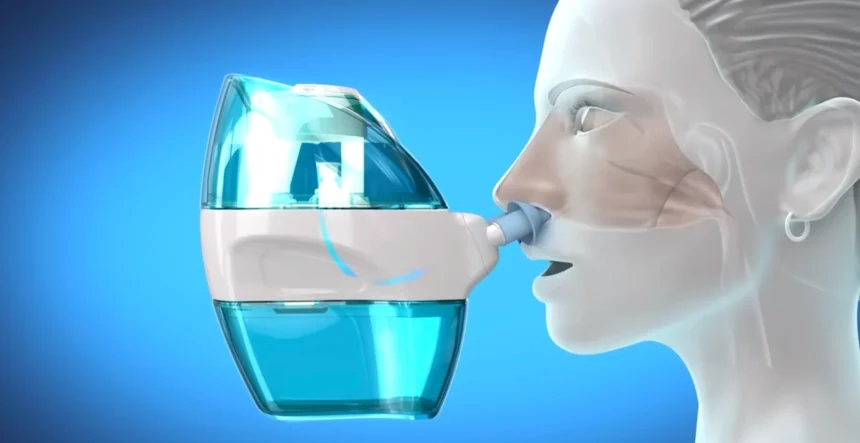
- Lean forward over the sink, tilt your head to one side and breathe through your mouth.
- Squeeze gently so the solution flows in one nostril and out the other.
- Use about half per side, blowing your nose gently between sides.
- Discard any leftover solution.
- Wash, rinse and air-dry your bottle.
The SinusReLeaf saline nasal rinse packets follow exactly this format: one pre-measured 5.1 gram packet for about 8 fluid ounces of safe water, with a buffered blend of sodium chloride, sodium bicarbonate, xylitol, hyaluronic acid and polysorbate 80.
Making the Habit Stick
Habit research consistently points to a few simple strategies. Here is how to apply them to rinsing.
Stack it onto an existing habit
Link your rinse to something you already do every day. “After I brush my teeth, I rinse my nose” is a clear, easy trigger.
Make it visible
Keep your rinse station where you will see it. Out of sight really can mean out of mind.
Make it easy
Pre-measured packets, a ready supply of safe water and a clean, dry bottle remove the friction. The fewer steps between you and the rinse, the more likely you are to do it.
Start small
If daily feels like too much at first, start with a few times a week and build up. Consistency matters more than perfection.
Track it
Some people like to tick off each rinse on a calendar or habit-tracking app. Seeing a streak build up can be surprisingly motivating.
Cleaning as Part of the Routine
A good routine includes cleaning, not just rinsing. Make bottle care part of the same few minutes:
- Take the bottle apart after every use.
- Wash all parts with warm water and mild dish soap, or as the manufacturer directs.
- Rinse with safe water.
- Let everything air-dry completely with the cap off.
- Set a reminder to replace your bottle regularly, typically every three months, or sooner if it becomes cloudy, cracked or hard to clean.
Storing Your Packets Properly
Saline nasal rinse packets are designed to stay fresh until you open them, but good storage helps:
- Keep them cool and dry. Bathrooms get steamy. If your rinse station is right next to the shower, consider keeping the main box in a nearby cupboard and only a few packets at the sink.
- Keep them sealed. Only open a packet right before you use it.
- Check dates. Look for a best-before or expiry date on the box and use older stock first.
- Inspect before use. If a packet is torn, damp or clumped, discard it and use a fresh one.
Stocking Up Without Running Out
Nothing breaks a habit faster than running out of supplies. A little planning helps:
- Work out your usage. If you rinse once a day, a 20-count box lasts roughly three weeks. Twice a day halves that.
- Reorder early. Set a reminder to reorder when you have about a week’s worth left.
- Keep a travel stash. A few packets in your toiletry bag mean you are never caught short on trips.
- Track water too. Add distilled water to your regular shopping list so it never runs out at the same time as your packets.
Common Routine Slip-Ups
Even experienced rinsers sometimes let small habits slide. Watch out for these:
- Using whatever water is nearest. When you are rushed, it is tempting to fill the bottle from the tap. Keep safe water ready so you are never tempted.
- Mixing ahead of time. Preparing a rinse the night before to save time in the morning means the solution sits around unpreserved. Always mix fresh.
- Leaving the bottle assembled and wet. Closing the cap on a damp bottle traps moisture. Leave the parts open to dry.
- Guessing the water volume. Fill to the marked line every time so the packet mixes to the right concentration.
- Rushing the drain. Skipping the final lean-forward and gentle blow often leads to drips later. Give it an extra minute.
Fix these and your routine will feel more comfortable and stay more hygienic.
Adjusting Your Routine Through the Year
Your routine does not have to be fixed. Many people adapt it to the seasons:
- Spring and summer: Consider an evening rinse after time outdoors during pollen season.
- Autumn: Rinse after raking leaves or garden clean-up.
- Winter: A morning rinse can refresh a nose dried out by indoor heating.
- Travel: Keep your routine going with travel-friendly packets and a plan for safe water.
Knowing When to See a Professional
A daily rinse is a hygiene habit, not a medical treatment. Stop rinsing and speak with a health care professional if you experience:
- Pain, burning or stinging that does not settle when you correct the water temperature and volume.
- Ear pain or a persistent feeling of fullness in the ears.
- Nosebleeds.
- Fever, facial swelling or severe headache.
- Symptoms that persist for more than a week or so, or get worse.
It is also wise to check with your doctor before starting a routine if you have had recent nasal, sinus or ear surgery, or have a history of ear problems.
Frequently Asked Questions
How long does a daily rinse take?
Once you are practised, about two to five minutes including cleaning your bottle.
Can I rinse twice a day?
Some people do, especially during high-pollen periods. Follow the guidance on your product label and ask a health care professional if you are unsure.
What if I miss a day?
Just pick up where you left off. A habit is built over weeks, not on any single day.
Do saline nasal rinse packets go off?
Most have a best-before or expiry date. Store them in a cool, dry place and check the date on the box.
A Small Habit With a Fresh Payoff
A daily nasal hygiene routine does not need to be complicated. Pick a time that suits you, set up a tidy rinse station, keep safe water and supplies stocked, and attach the habit to something you already do. Within a few weeks, rinsing will feel as automatic as brushing your teeth.
Ready to set up your routine? Visit the SinusReLeaf shop for saline nasal rinse packets made for everyday nasal hygiene, with a pre-measured, buffered saline formula featuring xylitol and hyaluronic acid.
This article is for general information only and is not medical advice. Nasal rinse products are intended for routine nasal hygiene. If you have ongoing symptoms or health concerns, please speak with a qualified health care professional.